| The
Empty Hours An opera by composer Ricardo Llorca |
||
| DVD PROMOCIÓN ESTRENO "LAS HORAS VACÍAS" Ópera de Ricardo Llorca, 31 de Marzo de 2007. | ||
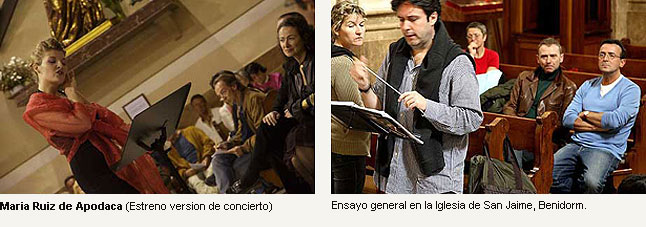
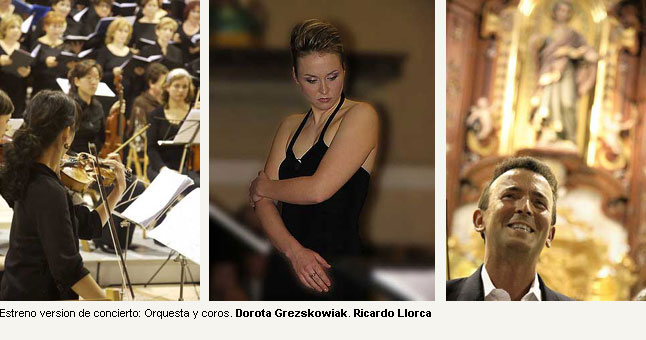
| Benidorm, Iglesia de San Jaime. / XII Setmana de Musica Sacra. Estreno de la Opera “Las Horas Vacias” ( en version de concierto ) por Dorota Grezskowiak, Maria Ruiz de Apodaca, la Agrupacion Coral de Benidorm y la Orquesta del Julius Stern Institute de Berlin dirigida por Matias de Oliveira. |
||
Benidorm. Iglesia de San Jaime/ XII Festival of Sacred Music Premiere of "Las Horas Vacias" ( in its concert version ) with Dorota Grezskowiak ( soprano), Maria Ruiz de Apodaca ( actress ), the Choir of Benidorm and the Orchestra of the Julius Stern Institute of Berlin conducted by Matias de Oliveira. |
||
"The Empty Hours" -a chamber opera for soprano, chorus, piano and a chamber orchestra- is a work about a lonely woman, addicted to the internet, who lives in her own fantasy world. 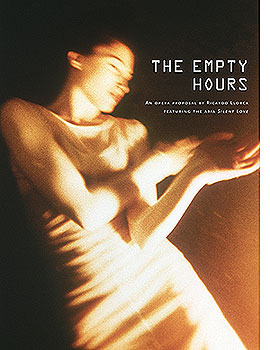 "The Empty Hours" is an attempt to explore a psychological process, so common in contemporary Western society, which is one of the most extreme, disturbing and painful that a human being can go through: the loneliness and Ithe increasing feeling of emptiness of the developed Western societies. "The Empty Hours" arose from my growing interest in juxtaposing and combining traditional techniques with elements of contemporary music. Elements of Italian Renaissance music and 17th Century operatic recitatives blended with a more contemporary language have served as my principal source of thematic and structural inspiration for this work. Building upon these ideas I have created recognizable melodic cells and poly rhythmic combinations within a stable structure and bitonal harmonies over a tradit hional foundation. The score is complex, as one would expect in a contemporary opera, but not indecipherable. Similarly, the timbre possibilities of the soprano have been thoroughly exploited, in some cases supported by the orchestration and in others opposed by it, but always within the limits of conventional writing for each instrument. "The Empty Hours" thus acquires a dual character, at once traditional and contemporary, maintaining a coherent narrative which is elaborated over a harmonic and melodic foundation that may be called non-atonal. In order to shed light on the ideas behind this opera and my motivations for composing it, it may help to mention certain factors and subjective phenomena which I believe define the work. In my opinion, there is a great deal of confusion today about the objectives of contemporary music and the elements it has a µt its disposal. In the absence of a single unifying tendency or a specific defining style, young composers have been forced to choose between continuing along the path of experimentation or returning to a classical framework. Some of us have felt unable to continue conforming to the aesthetic models that have dominated classical music in recent decades. Looking back is perhaps the only viable alternative: reexamining the past, working with classical (horizontal and vertical) structures and concepts, and rehabilitating traditional views of musical expressiveness.
|
||
 |
||
| Premiere and upcoming performances: | ||
March 31st 2007 Benidorm. Iglesia de San Jaime/ XII Festival of Sacred Music |
||
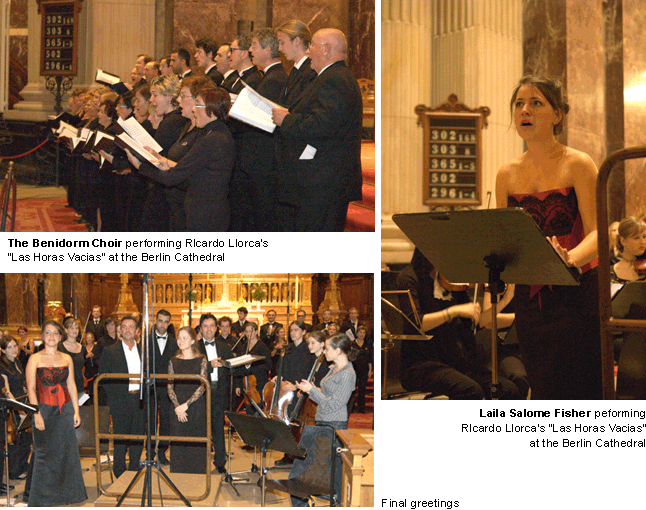
September 7th 2007 Berlin Cathedral |
||
 |
||
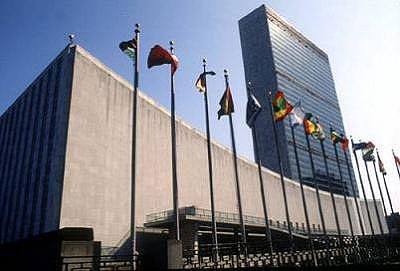
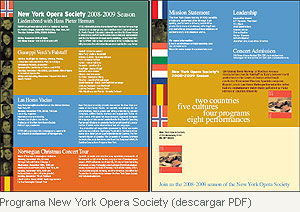
November 17th, 2008 The United Nations
|
||
| PRESS: | ||
Berlin Dom - Guest engagement/Opera |
||
| CONCERT VERSION : | ||
This opera ( in its concert version) is planned to be performed by:
|
||
| STAGE VERSION : | ||
This opera ( in its stage version) is planned to be performed by:
|
||